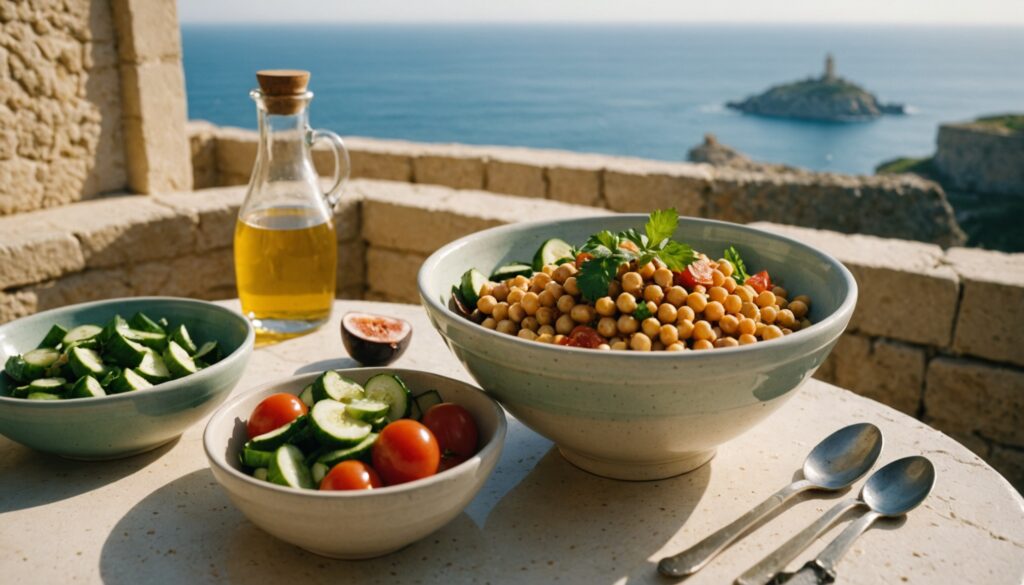
Yes, the research points in a positive direction. Studies and reviews consistently link a Mediterranean-style way of eating with a more diverse gut microbiome and with higher levels of bacteria that produce short-chain fatty acids, compounds that support the gut lining. It is not a magic fix, and individual responses vary, but it is one of the best-supported dietary patterns for gut health.
What do we mean by the Mediterranean diet?
It is less a strict plan than a pattern of eating built around plants. The core elements are:
- Vegetables, fruit, pulses, wholegrains, nuts and seeds eaten daily
- Extra virgin olive oil as the main added fat
- Fish and seafood regularly, with poultry, eggs and dairy in moderation
- Red and processed meat, sweets and ultra-processed foods only occasionally
In Malta, much of this is already on the doorstep: seasonal tomatoes, broad beans, peas, capers, local olive oil, fresh fish, and bread that does not come in a plastic bag. For expats used to a different food culture, it can be a gentle way to adapt rather than a diet to “start”.
What does the research say about the microbiome?
A 2020 review in Nutrients looked at how the Mediterranean diet interacts with the gut microbiota. It concluded that this dietary pattern can modulate the microbiota and is associated with greater diversity, with the authors highlighting polyphenols, omega-3 fats and fibre as key players.
A 2025 review, also in Nutrients, goes into more detail. It describes how the diet’s plant-rich, olive oil-based pattern supports beneficial bacteria such as Bifidobacterium, Faecalibacterium prausnitzii and Roseburia. These microbes produce short-chain fatty acids, which are linked to gut barrier integrity and lower inflammation. The authors also note that long-term clinical trials are still needed, particularly to understand why people respond differently.
One of the larger trials is NU-AGE, published in Gut in 2020. It followed older adults across five European countries for a year while they followed a Mediterranean-style diet, and reported changes in their gut microbiome alongside improvements in markers of frailty and health status. The participants were older people, so the results do not translate directly to a 30-year-old, but they show the microbiome can shift within a year of changing what is on the plate.
Which foods seem to matter most?
Fibre-rich plants
Pulses, vegetables, fruit, wholegrains and nuts feed gut bacteria. Variety matters as much as quantity, as different fibres suit different microbes. If you are unsure how much you are eating, our guide on how much fibre women need each day is a good place to start.
Polyphenol-rich foods
Extra virgin olive oil, berries, herbs, tomatoes, red onions, nuts and even coffee and tea contain polyphenols. The reviews above suggest these plant compounds are one reason the diet influences the microbiota.
Oily fish
Sardines, mackerel and other oily fish provide omega-3 fats, another component the 2020 review identified as relevant to the diet’s effects on gut bacteria.
Does it work for everyone, and can it cause bloating?
Not identically for everyone. The 2025 review specifically points to individual variability as something researchers still need to understand. Your starting diet, medications, stress levels, sleep and gut sensitivity all play a part.
If you currently eat little fibre, a sudden switch to large portions of beans, raw vegetables and wholegrains can cause wind and bloating. Increase gradually over a few weeks, drink enough water (especially in the Maltese summer) and see what suits you. If healthy food still leaves you uncomfortable, you may find why you feel bloated after healthy meals useful reading. People with IBS may tolerate some Mediterranean foods, such as onions, garlic and certain pulses, less well and should seek individual advice from a GP or a registered dietitian.
How can you eat this way in Malta, practically?
- Start with one meal. Make lunch the anchor: a big salad with chickpeas or beans, tuna or sardines, olives and a generous drizzle of olive oil.
- Shop at the market. Seasonal local produce is usually fresher and cheaper than imported out-of-season items.
- Swap, do not ban. Wholemeal bread instead of white, nuts instead of crisps, fruit with yoghurt instead of pastries.
- Cook simply. Soups, stews and roasted vegetables with pulses are forgiving and freeze well, which helps on busy workdays.
- Include fermented foods if you enjoy them. Plain yoghurt or kefir can sit comfortably within this pattern. If you are wondering how foods differ from supplements, see our explainer on prebiotics versus probiotics.
The Mediterranean diet is a long-term pattern, not a short-term plan, and the evidence relates to sustained habits rather than quick changes.
When should you see a doctor?
Diet can support your gut, but it does not replace medical care. Speak to your GP or pharmacist if you have persistent bloating, a lasting change in bowel habits, blood in your stool, unexplained weight loss, severe or night-time abdominal pain, or symptoms that keep returning despite dietary changes. These can have causes that need proper assessment.
Frequently asked questions
How long does it take for the diet to change the microbiome?
Gut bacteria respond to what you eat fairly quickly, but lasting changes depend on keeping up the habits. The NU-AGE trial followed participants for a year. There is no reliable timeline that applies to everyone.
Do I need a probiotic if I eat a Mediterranean diet?
Not necessarily. The diet supplies fibre and polyphenols that nourish the bacteria you already have. The 2025 review mentions that combining the diet with probiotics is an emerging area, but more research is needed. If you are considering one, check our guide to choosing a probiotic.
Is the Mediterranean diet suitable if I am vegetarian?
Yes. The pattern is already plant-centred, and pulses, nuts, eggs and dairy can provide protein. Vegans and anyone with food allergies may wish to check with a dietitian that nutrient needs are covered.
Is it just about olive oil?
No. Olive oil is an important part, but the benefits described in the research come from the whole pattern: plants, fibre, healthy fats and less ultra-processed food together.
This article is part of the Gut & Glow blog, created by Brasil Botanique, a wellness brand being developed for women in Malta. It is for general information and is not a substitute for personal medical advice.